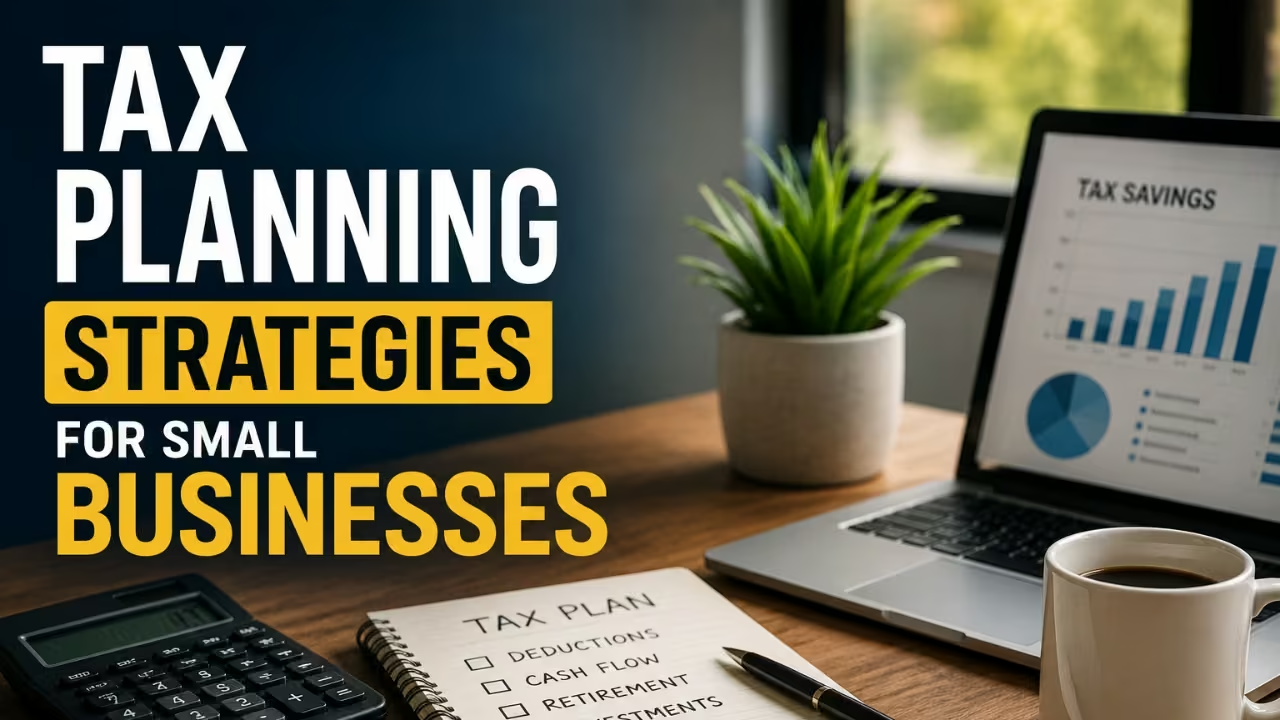
Tax planning is a critical aspect of financial management for small businesses. Whether you’re a startup or a well-established company, understanding and effectively managing your tax obligations can have a substantial impact on your bottom line. In this section, we will explore the significance of tax planning for small businesses, highlighting its role in optimizing financial resources and ensuring legal compliance.
Small businesses often operate with limited resources and tight budgets. Every dollar saved through strategic tax planning can be reinvested in the company, enabling growth, innovation, and sustainability. Proper tax planning can also help prevent financial setbacks, penalties, and legal issues that can arise when tax obligations are neglected or misunderstood.
Sole Proprietorship:
Partnership:
Limited Liability Company (LLC):
S Corporation:
C Corporation:
Annual Tax Returns:
Estimated Quarterly Taxes:
Self-Employment Tax:
Ordinary and Necessary Expenses:
Start-up Costs:
Home Office Deductions:
Depreciation and Amortization:
Accurate recordkeeping is a fundamental practice for small businesses for several reasons:
Knowing when to seek the assistance of a tax professional is crucial for small businesses. You should consider hiring a tax professional in the following situations:
Tax planning offers several benefits to small businesses, including:
Small businesses can legally reduce their tax liability through strategies such as:
Small businesses should consider changing their tax strategies when:
Recent tax law changes can impact small business taxation in various ways, including: